10 hr
Etosha National Park Game Drive
- Expert local guide
- Small group
- Skip-the-line access
- Free cancellation
Etosha Guided Game Drive — Reserve Your Wildlife Safari
Track lions at sunrise waterholes, guided by rangers who read the pan
Compare fares, pick the fit — all bookings are mobile-voucher and eligible for free cancellation where shown.
10 hr
24 hr
72 hr
Visitors can explore the wilderness through an official etosha guided game drive, choosing between daytime excursions or specialized nocturnal adventures. These experiences provide unique access to the park's diverse wildlife and iconic waterholes.
| Daytime Safari Mid-level Access |
Top pick Morning/Night Drive Timed Access |
|
|---|---|---|
| Duration | 5 hours | 3 hours |
| Wildlife focus | Full park circuit | Waterhole sightings |
| Availability | Subject to demand | Requires reservation |
| Refreshments included | Water and juice | |
| Best for | First-timers | Photography-minded travelers |
| See tickets & prices |
Verdict: For those prioritizing wildlife activity and essential after-dark observation, booking an etosha guided game drive tour in advance is highly recommended.
Worth it for wildlife enthusiasts seeking expertise
An Etosha guided game drive elevates a self-drive visit into an educational safari experience. While the park's 280 NAD daily conservation fee grants independent access to waterholes and open plains, guided options—ranging from half-day drives to multi-day expeditions departing from Windhoek—add trained tracker expertise that dramatically increases sightings of elusive predators like leopards and cheetahs. Professional guides interpret territorial markings, decode alarm calls from prey species, and position vehicles for optimal photography at active dens. The Full-Day Etosha Wildlife Safari provides all-day tracking with packed meals, while shorter tours focus on prime morning hours when lions and elephants congregate at waterholes. For visitors unfamiliar with African ecosystems or traveling without 4x4 experience, guided tours justify their premium through access to restricted areas, real-time radio coordination between vehicles, and the ability to identify over 340 bird species by call alone—knowledge that transforms passive observation into active discovery.
Bottom line: Guided game drives convert Etosha's vast terrain into a curated wildlife masterclass, worth the investment for those valuing expert interpretation over independent exploration.
An etosha guided game drive provides expert ecological insights, while a self-drive safari offers complete flexibility for those seeking a personal pace across the vast salt pan network. These experiences complement one another; most visitors who do both find the ranger-led excursions provide a more revealing look at animal behavior.
|
Top pick Guided Drive |
Self-Drive | |
|---|---|---|
| Navigational freedom | Fixed routes | Unlimited access |
| Wildlife tracking expertise | Professional ranger | Independent observation |
| Vehicle capability | High-clearance specialized vehicle | Passenger vehicle only |
| Ability to stop at will | Limited to schedule | Complete autonomy |
| Safety considerations | High oversight | Individual responsibility |
| Educational depth | In-depth commentary | Self-guided research |
| See tickets & prices |
Verdict: Opt for etosha guided game drive tours if you prioritize spotting elusive species with professional assistance, or choose self-drive if you prefer solitude and the ability to linger at waterholes according to your own etosha guided game drive tour schedule. When booking etosha guided game drive tickets, ensure you confirm your departure time to align with early morning wildlife activity.
Hand-picked experiences loved by thousands of travelers
2.5 hours
Free Cancellation
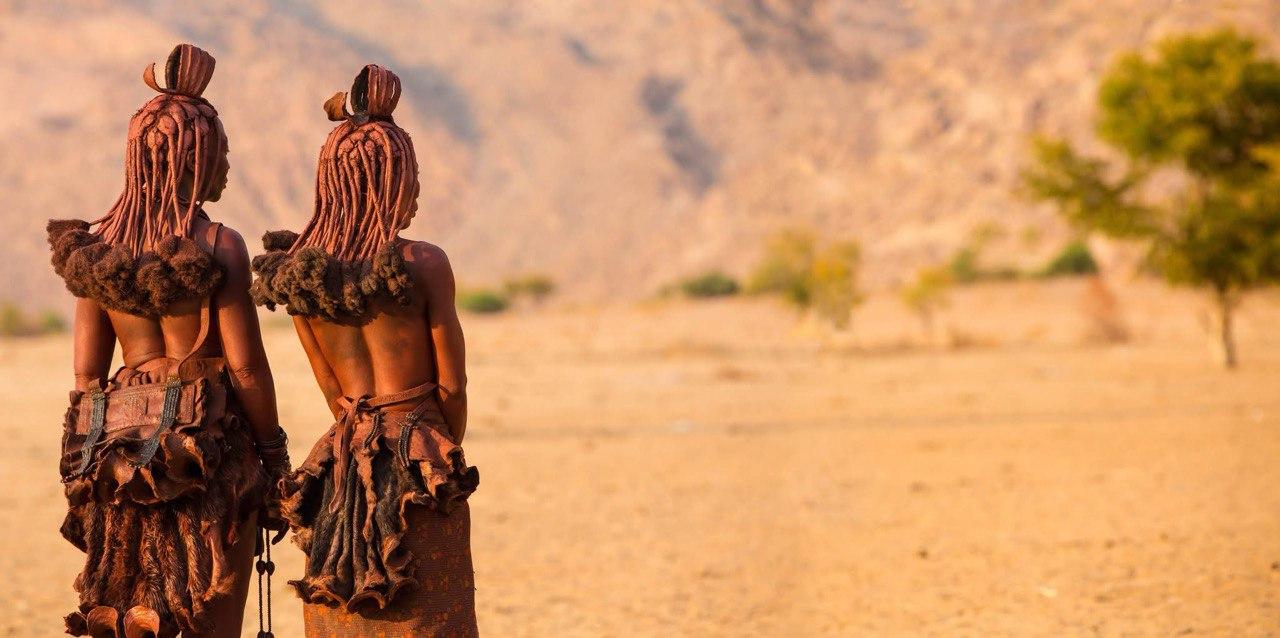
Visit an authentic Himba community near Etosha and discover centuries-old traditions still practiced today
5 hours
Free Cancellation
Experience Namibia's premier wildlife reserve with expert-led small group safaris and intimate animal encounters
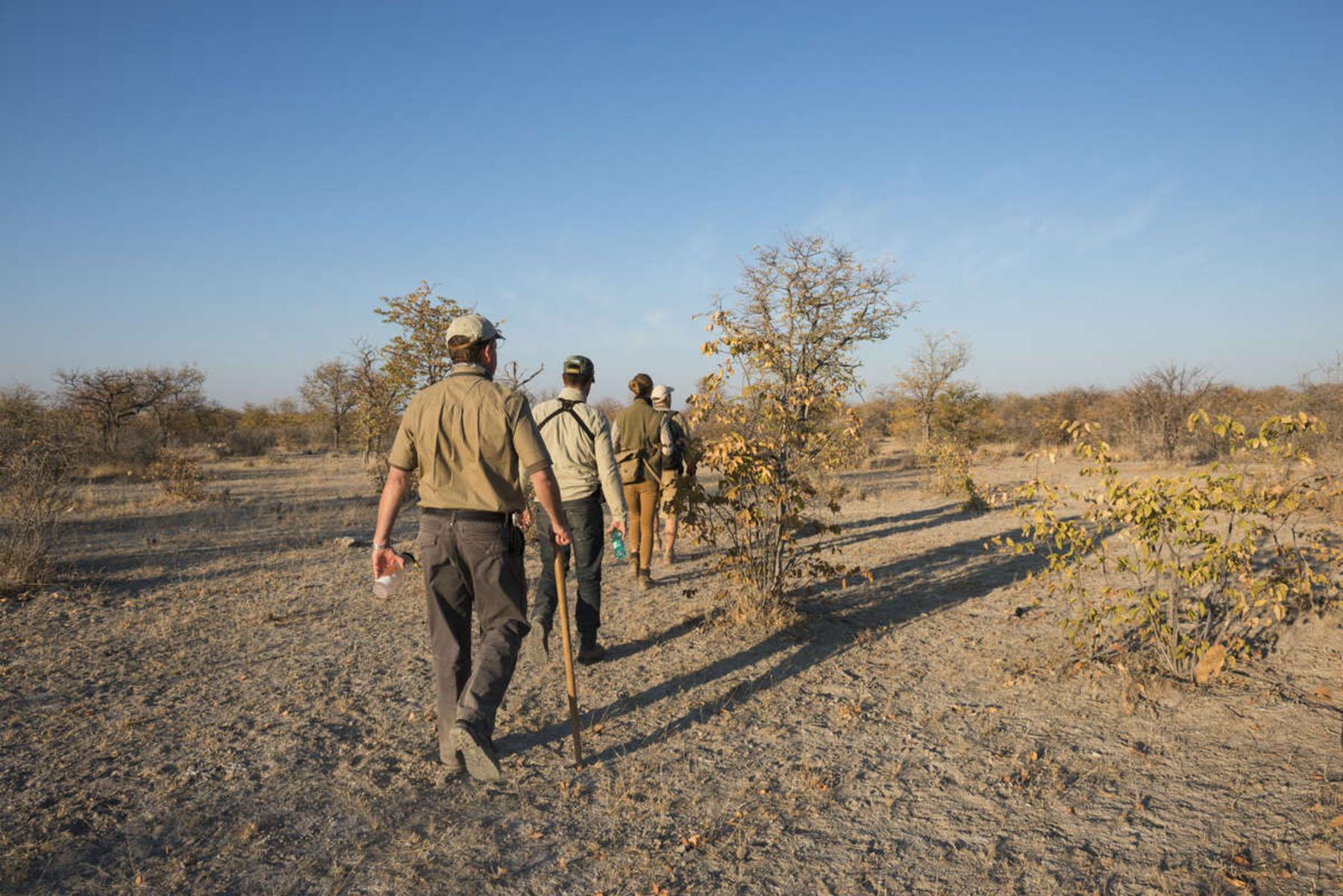
You meet your guide at 06:30 as pale light spreads across the pan's white crust. The open-sided safari vehicle exits camp onto a gravel track connecting Okaukuejo's waterhole network, where your guide slows near the first pan — a herd of springbok fans across the approach, ears swivelling. Binoculars come up.
Within twenty minutes you count three giraffe browsing acacia canopy, a kudu bull at the verge, and fresh lion tracks pressed into damp clay.
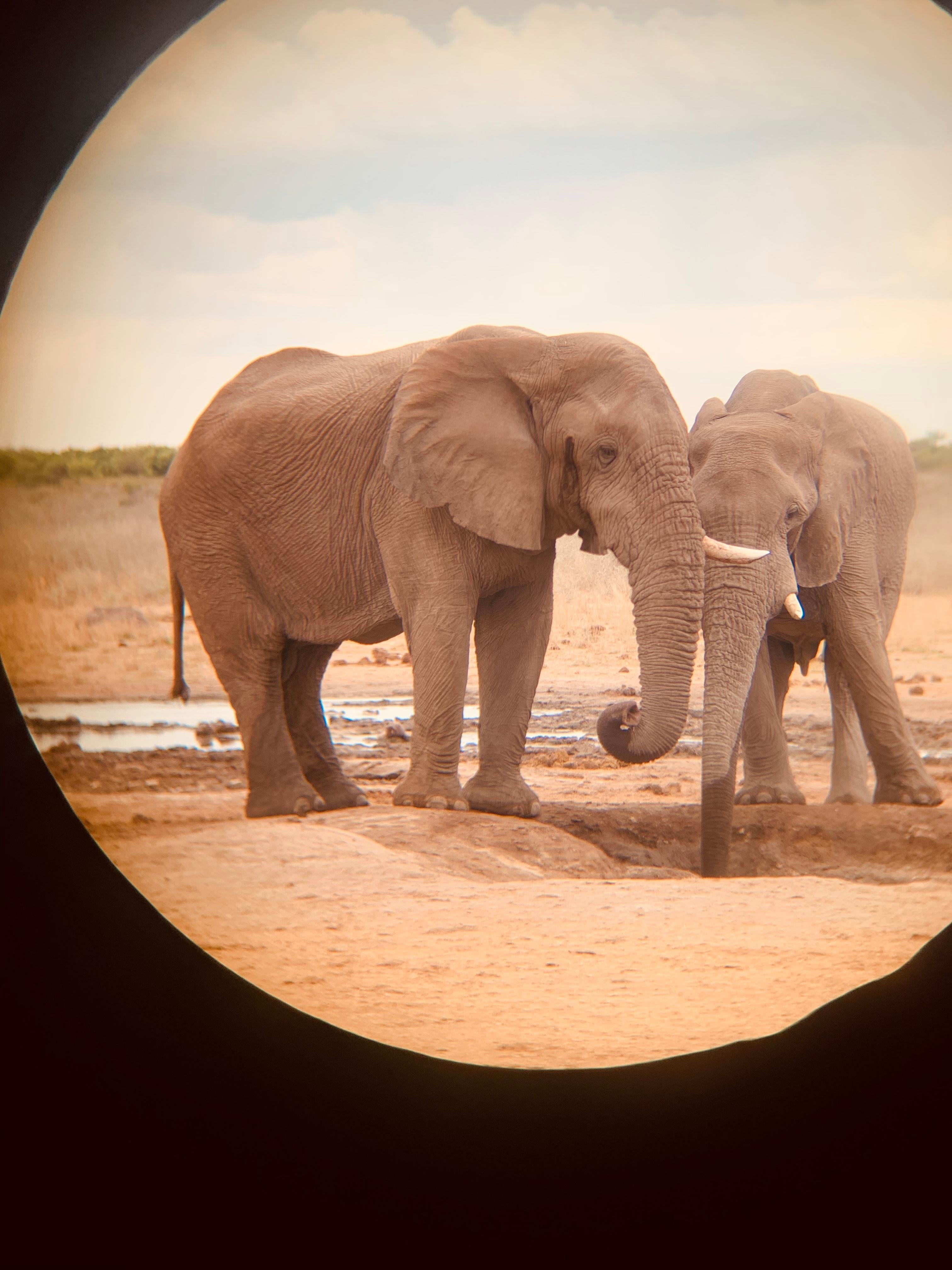
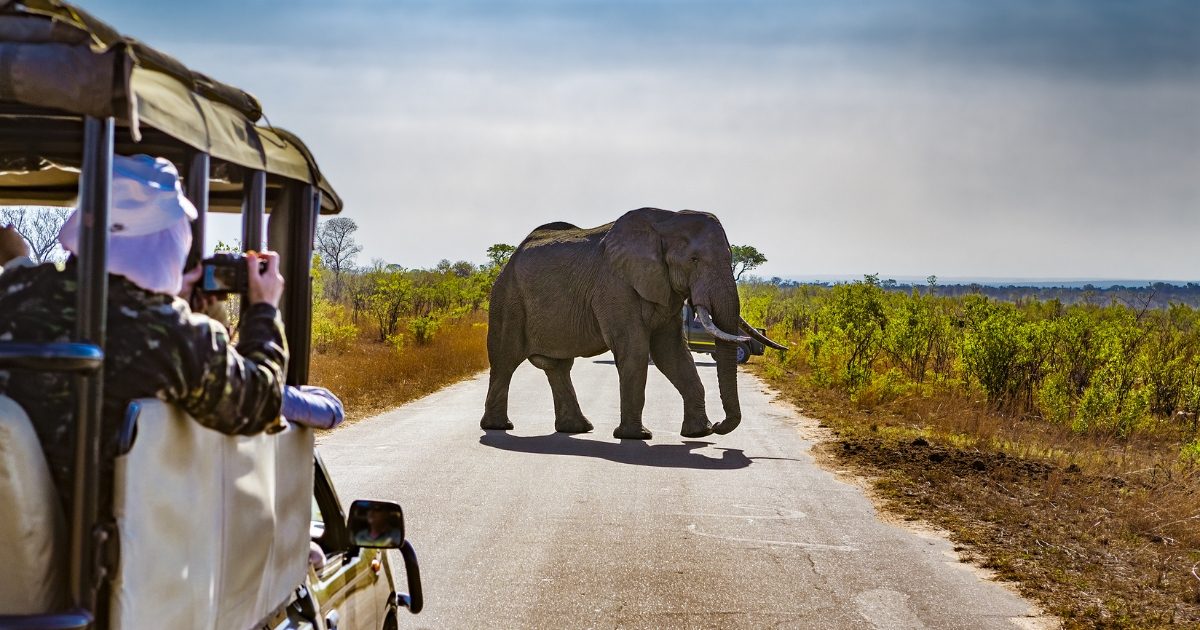
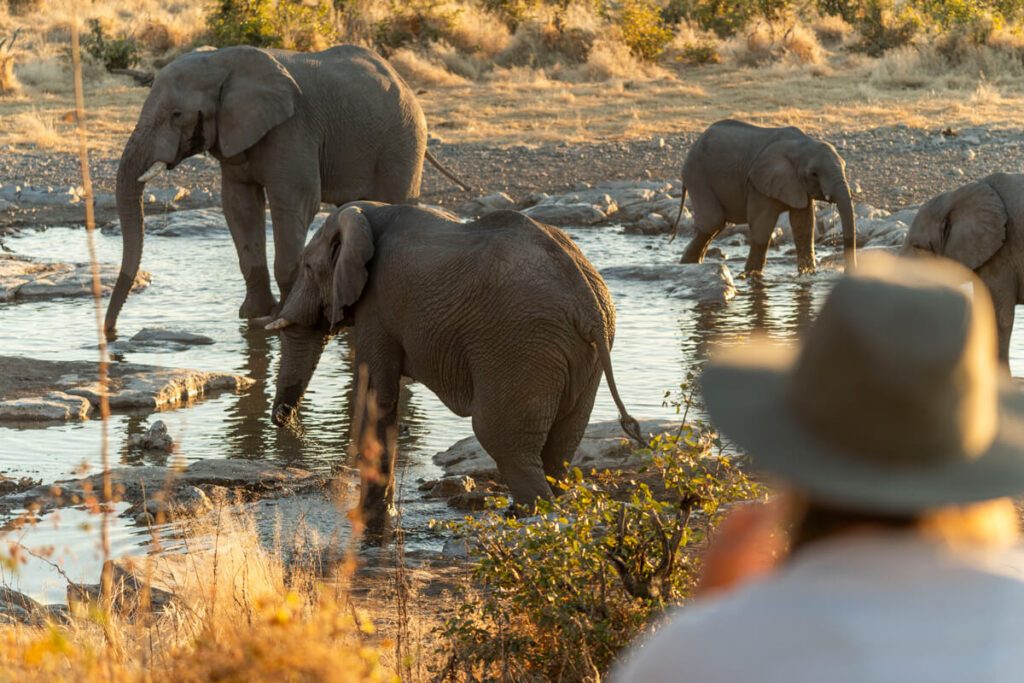
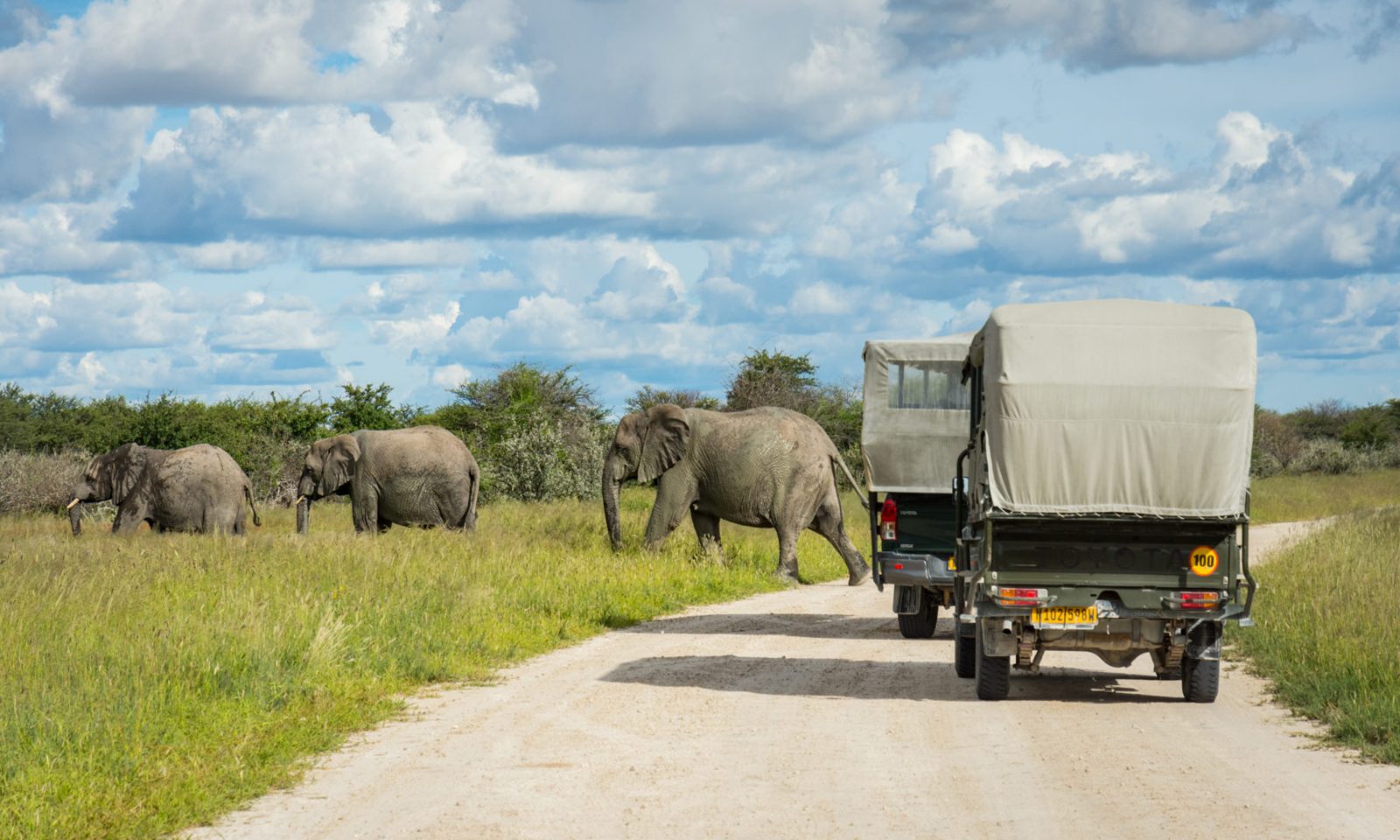
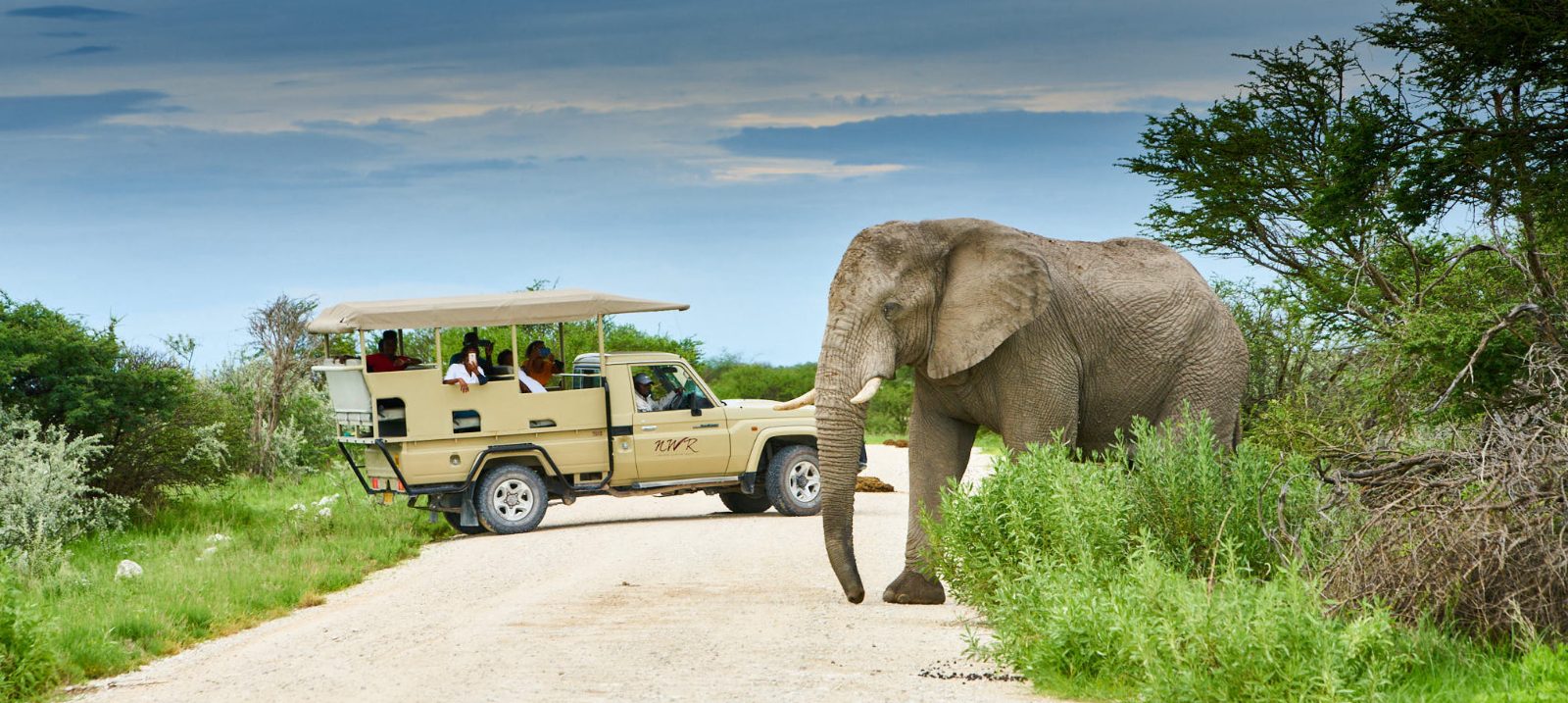
Mid-morning brings elephant — a breeding herd of eleven surrounding a shallow pool, calves submerged to their shoulders, adults dusting red Kalahari sand onto wet backs. Your guide cuts the engine at sixty metres and waits. Trunk tips curl, testing your scent. You frame the matriarch through a telephoto lens as she angles one ear forward, a gesture your guide reads as tolerance. You watch for nine minutes before the vehicle rolls forward to Halali.
By noon you've logged sightings in a field notebook — zebra, oryx, steenbok, and a pair of black-backed jackal quartering the pan margin. The return route detours past Rietfontein waterhole, where a lone black rhino stands motionless in midday glare, horn tip catching the sun.
All the details about your upcoming adventure in one place
Etosha National Park protects 22,270 square kilometres of savanna surrounding a vast salt pan visible from orbit. The pan itself — a dry lakebed stretching 130 kilometres east to west — draws wildlife to its fringes where permanent and seasonal waterholes create natural amphitheatres for observation.
Proclaimed a game reserve in 1907 and designated a national park in 1967, Etosha anchors Namibia's conservation infrastructure and hosts one of Africa's densest concentrations of large mammals during the dry winter months from May through October.
An Etosha guided game drive operates as a structured wildlife safari led by accredited guides who navigate the park's 1,350 kilometres of gravel roads connecting waterhole networks across three distinct ecological zones. The eastern grasslands support springbok and zebra herds that number in the thousands during seasonal migration. The central pan edge concentrates predator activity around Okaukuejo, Halali, and Namutoni rest camps, where floodlit waterholes permit nocturnal viewing of black rhino, elephant, and lion. The western mopane woodland corridor, opened to visitors in 2014, provides dry-season refuge for giraffe, kudu, and endangered black-faced impala. Professional guides carry radio telemetry to track collared predators and maintain real-time communication with park rangers monitoring animal movement patterns.
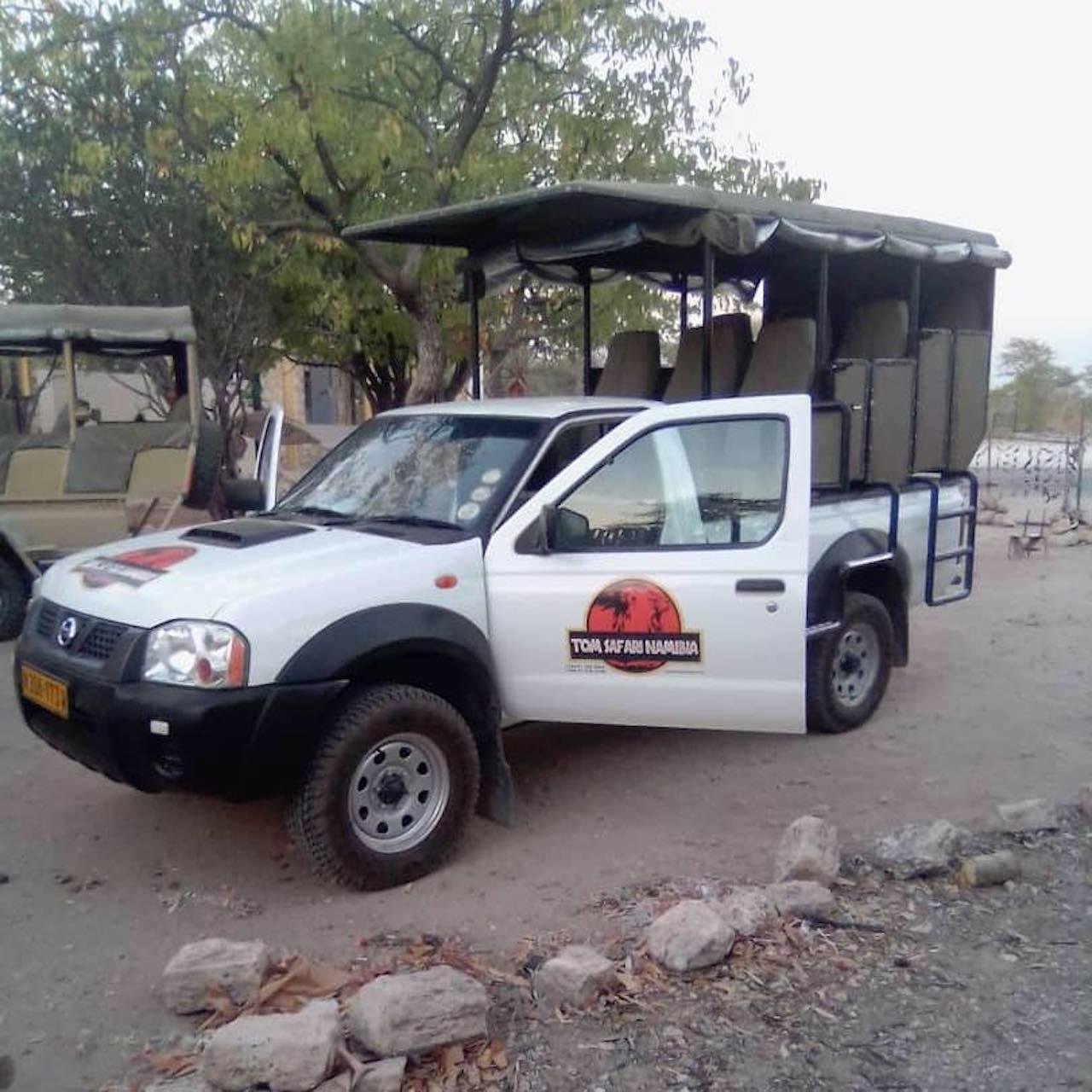
Etosha's guided safari tours range from half-day sunrise excursions departing at 06:30 to multi-day expeditions combining game drives with cultural visits to Himba communities north of the park boundary. Full-day wildlife safaris from Windhoek include the 430-kilometre road transfer via Outjo, entering through Anderson Gate and tracking the western waterhole circuit before exiting at Galton Gate. Three-day safari adventures typically lodge at Okaukuejo or Halali camps, allowing morning and late-afternoon game drives that bracket midday heat when animals retreat to shade. Operators supply open 4×4 vehicles with tiered seating, binoculars, field guides, and cooler boxes; guides interpret spoor, identify birdcalls from Etosha's 340 recorded species, and position vehicles for photography at ethical distances mandated by park regulation.
The pan edge concentrates predator activity where floodlit waterholes permit nocturnal viewing of black rhino, elephant, and lion.
Dress in neutral-colored, layered clothing suitable for variable temperatures in an open game viewer. A hat and sunglasses are essential for sun protection during any etosha guided game drive.
Keep all park entry permits and receipts accessible at all times, as officials may request them. Maintain a professional demeanor when interacting with park rangers and staff.
Photography is encouraged, but stay inside your vehicle during self-drive segments. For a professional etosha guided game drive tour, ensure your camera gear is secured against dust.
Children are welcome on many tours, though some operators have age restrictions (usually 7+). An etosha guided game drive is a safe way to show kids African wildlife.
Most guided vehicles are high-clearance open 4x4s, which may require assistance to board. Please notify your operator in advance if you have specific mobility needs.
Bring sufficient drinking water and snacks for your day. You may pre-order lunch packs or dine at the restaurants located within the main rest camps during your etosha guided game drive.
Opening hours
06:30–18:30
Address
Etosha National Park, Kunene Region, Namibia
Accessibility
Accessible by all standard 4x4 vehicles
Best arrival window
06:30–09:00
Park policy
No pets allowed
Official site
https://nwr.com.na
Cancellations must be processed through the NWR reservation system. Fees for the etosha guided game drive may vary by operator; contact your booking provider for specific refund windows.
Recommended time
Half a day
An etosha guided game drive typically spans several hours, allowing visitors to traverse the salt pan and surrounding waterholes where animal sightings are most frequent. Booking etosha guided game drive tours ensures access to professional trackers who maximize your coverage of the vast landscape. By choosing an etosha guided game drive tour, you avoid the logistical challenges of self-navigation and benefit from the expertise of local rangers who identify predators and plains game with precision. Securing etosha guided game drive tickets ahead of your arrival helps you bypass site-specific bottlenecks, ensuring a smooth transition from the gate to the wilderness.
Crowd levels through the day
Etosha National Park's origins trace to 1907, when German colonial governor Friedrich von Lindequist proclaimed the entire northwestern corner of German South West Africa a game reserve. The original boundary enclosed 99,526 square kilometers, making it one of the largest protected areas on earth. Early wardens traveled on horseback, armed only with binoculars and notebooks. Poaching remained rampant. In 1928, the South African administration shrank the reserve to 55,000 square kilometers, and again in 1947 to roughly its present 22,270 square kilometers, excising the western Kaokoveld and northern Ovamboland to accommodate settler farming and Herero resettlement. Organized etosha guided game drive tours began in the late 1950s, when the first gravel roads reached Okaukuejo rest camp and the South African Parks Board installed a floodlit waterhole. Visitors arrived in Land Rovers, notebooks in hand, tracking black rhino and elephant by moonlight. By 1967, Etosha had formalized its network of waterholes—Okaukuejo, Halali, Namutoni—each engineered with concrete aprons and pump systems to guarantee year-round water. The guided safari model expanded rapidly after Namibian independence in 1990, when community conservancies and private operators secured concession rights to lead etosha guided game drive tickets into previously restricted eastern sectors. Today's guided tours follow the same pan-edge loop pioneered in the 1960s, but vehicle standards, radio coordination, and ecological training have transformed the experience. Operators navigate 5,000 square kilometers of accessible terrain, tracking lion coalitions, cheetah sightings, and the park's 340 bird species. The floodlit Okaukuejo waterhole, installed in 1958, remains a centerpiece of night drives. Conservation fees introduced in 2015 fund anti-poaching patrols and waterhole maintenance, ensuring the infrastructure that makes Etosha's guided safari network sustainable.
Friedrich von Lindequist proclaims 99,526-square-kilometer Etosha Game Reserve under German colonial administration.
South African authorities reduce reserve size to 55,000 square kilometers, excising western Kaokoveld.
Boundaries contract again to 22,270 square kilometers to accommodate resettlement and farming expansion.
Okaukuejo rest camp installs first floodlit waterhole, pioneering night-time wildlife observation infrastructure.
Parks Board formalizes waterhole network across Okaukuejo, Halali, and Namutoni with engineered pump systems.
Namibian independence opens eastern sectors to community conservancies and licensed private safari operators.
Conservation fee system introduced to fund anti-poaching patrols and waterhole maintenance across accessible zones.
Position yourself at the edge of the stone wall for eye-level shots of elephants and rhinos. This location is a prime spot during an etosha guided game drive where wildlife frequently congregates.
Visiting the park with children allows families to experience an etosha guided game drive while observing diverse wildlife in their natural habitat. Planning your day ensures a smooth experience while tracking giraffes, lions, and elephants across the vast landscape.
The terrain is rugged and unpaved, making standard strollers impractical for most areas; a sturdy baby carrier is highly recommended for mobility.
Children aged six and older typically gain the most from these excursions, as the duration requires patience while scanning the horizon for elusive predators.
Restrooms are located primarily at the main rest camps rather than in the open bush, so encourage children to use facilities before starting your etosha guided game drive tour.
Younger travelers often benefit from shorter sessions; consider booking private etosha guided game drive tours to allow for flexible stops when interest wanes.
The park remains open regardless of weather, though heavy rain can limit visibility; verify your etosha guided game drive tickets permit rescheduling if conditions become hazardous for young children.
Dining options within the park are conveniently located at major rest camps, allowing you to refuel near your etosha guided game drive route. These venues serve as vital hubs for wildlife enthusiasts exploring the savanna.
Located inside the Okaukuejo camp, this venue offers hearty meals perfect after morning etosha guided game drive tours. It provides a relaxed atmosphere overlooking the camp's famous floodlit waterhole.
Everything you need to know for your journey
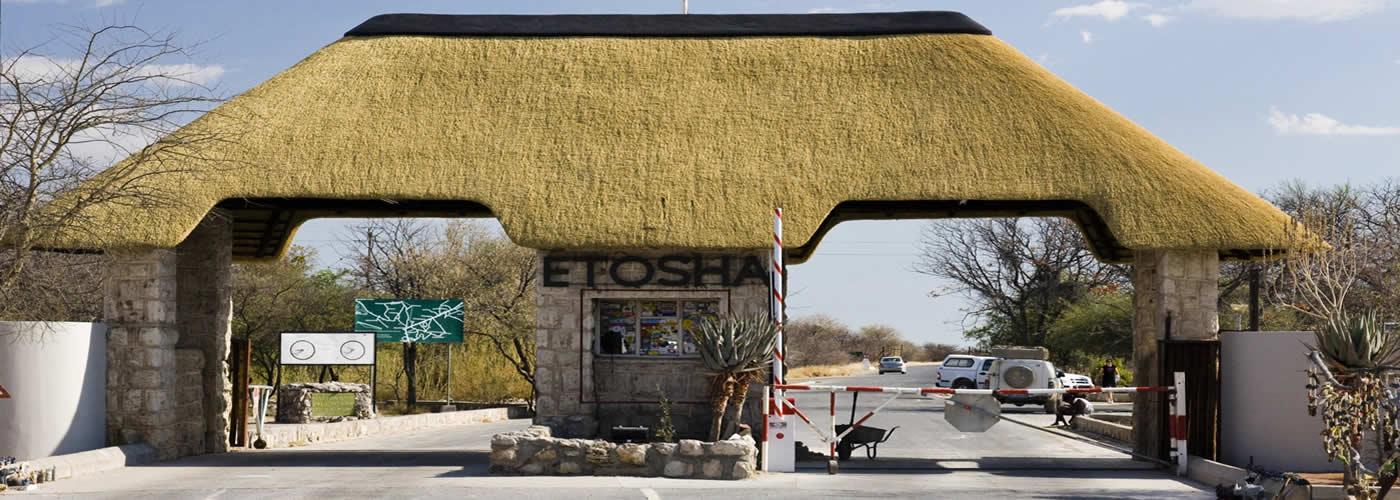
Etosha National Park gates open daily from 06:30–18:30. We recommend an arrival window of 06:30–09:00 for the best wildlife activity.
A guided experience provides expert commentary and trained drivers who know where to find animals. Self-drive offers flexibility, but a professional etosha guided game drive tour often yields better sightings.
Yes, families are welcome, though check age requirements with your specific operator. An etosha guided game drive is an excellent way to introduce children to the ecosystem.
Every foreign adult must pay 280 NAD as a conservation fee per day. This fee is mandatory for all visitors entering the park for an etosha guided game drive.
Yes, advance booking is highly recommended to guarantee your spot, especially during peak seasons. You can purchase your etosha guided game drive tickets via your lodge or NWR.
While you may see lion, leopard, elephant, and rhino, buffalo are not found in the park. An etosha guided game drive is a fantastic way to track these iconic species.
Bring binoculars, sunscreen, and layers, as mornings are chilly. A hat is also advised for any etosha guided game drive.
Refreshments like water are usually included, but lunch is often separate. Confirm inclusions when purchasing your etosha guided game drive tour.
Yes, you must show proof of identification at the gate to enter the park for your etosha guided game drive.
Join thousands of happy travelers who have discovered this incredible experience
Book Your Experience Now